Good to know / Skin & hair
Get to know what goes on you.
A familiar bottle can still have unfamiliar names. Make sense of the list, separate a claim from a fact, and bring your own preferences to your next choice.
Start with the cosmetic label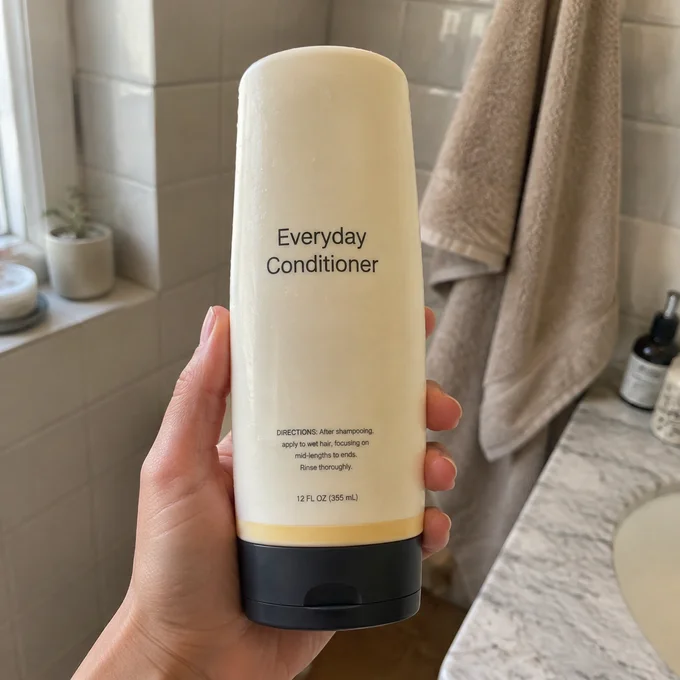
Start here
What matters in your routine?
Your label companion
One question. A useful answer.
Fragrance-free vs unscented: a label check
Unscented does not necessarily mean no fragrance ingredients. Compare the front statement with the actual ingredient list rather than using smell as the test.
Read the check 02 / Label checkAlcohol Denat. vs cetearyl alcohol
Read the full ingredient name. Denatured ethanol and fatty alcohols such as cetearyl alcohol are different ingredients, so a search for alcohol alone is too broad.
Read the check 03 / Label checkRecognizing SD Alcohol on a cosmetic label
SD Alcohol is a denatured-ethanol label name. The numbers or letters that follow identify the denatured form; they do not turn it into a fatty alcohol.
Read the check 04 / Label checkChecking shampoo for fragrance
Look at the ingredient list for the exact shampoo, not just its scent description. Fragrance ingredients can be present even when the product is described as unscented.
Read the check 05 / Label checkReading alcohol names in conditioner
Do not reject every alcohol-named ingredient as ethanol. First distinguish the exact names so your ingredient preference is applied to the ingredient you actually mean.
Read the check 06 / Label checkChecking a hypoallergenic body lotion
Treat hypoallergenic as a front-label claim, then check the ingredients you personally need to avoid. It is not a federal guarantee of fewer reactions.
Read the check 07 / Label checkCan ingredient order reveal a cosmetic percentage?
Ingredient order is not a percentage table. In US cosmetics, lower-level ingredients and color additives have ordering exceptions, so position alone cannot give exact concentrations.
Read the check 08 / Label checkReading the one-percent ingredient-order exception
Ingredients at one percent or less can be listed in any order after ingredients above one percent. The label does not necessarily mark the point where that exception starts.
Read the check 09 / Label checkReading may-contain colors on makeup
A may-contain color list on makeup can describe a range of shades. Do not read it as the same kind of statement as a food allergen cross-contact warning.
Read the check 10 / Label checkFinding ingredients on the cosmetic carton
Check the outer box before assuming the ingredient list is missing. For a boxed retail cosmetic, the declaration can be on the outer packaging.
Read the check 11 / Label checkFinding the ingredient list on a small cosmetic
A small or decorative package may use an attached tag, tape or card for its ingredient declaration. Look for that information before relying on the front label.
Read the check 12 / Label checkWhen fragrance hides individual ingredient names
A fragrance declaration can stand for a mixture. The label may therefore identify fragrance without revealing each component you want to check.
Read the check 13 / Label checkChecking natural claims on a scented body oil
Plant origin is not a substitute for checking intended use and ingredients. A natural or essential-oil description does not establish that a scented product suits you.
Read the check 14 / Label checkPersonal wipes vs surface wipes
Read the intended use first. A wipe for cleaning a surface is not interchangeable with a wipe labeled for personal cleansing.
Read the check 15 / Label checkChecking fragrance in cleansing wipes
Check the ingredient list even if the wipes are labeled unscented. Masking fragrance can be used without giving the product a noticeable scent.
Read the check 16 / Label checkComparing two cosmetic ingredient lists
Compare exact names and declared information before comparing marketing claims. Similar packaging, price or ingredient order does not prove that two formulas are the same.
Read the check 17 / Label checkReading active and inactive cosmetic-drug ingredients
When a product is both a cosmetic and a drug, read the drug-active information as well as the other ingredients. One section cannot replace the other.
Read the check 18 / Label checkWhy a cosmetic lacks a food-style allergen box
Do not expect a cosmetic to use the same allergen declaration system as packaged food. Check the full cosmetic ingredient list and unresolved fragrance information.
Read the check 19 / Label checkPhotographing a cosmetic label clearly
Capture the full ingredient declaration and the exact product version. If the ingredients are on the box or an attached card, the bottle front is not enough.
Read the check 20 / Label checkRechecking a cosmetic after a formula change
Use the current package when comparing a replacement product with an older one. The same product name is not enough to establish identical ingredient lists.
Read the check 21 / Label checkComparing skincare prices per 100 ml
A lower shelf price does not always mean a lower price for the quantity you receive. Compare the same units and the same kind of product before using package size to judge value.
Read the check 22 / Label checkNo expiration date on a cosmetic: what to check
An ordinary US cosmetic may have no printed expiration date. That does not mean it lasts indefinitely; use the product instructions and ask the company about the exact reference if shelf life is unclear.
Read the check 23 / Label checkDoes a cosmetic date cover storage in a hot car?
A printed date does not prove that a cosmetic is unchanged after poor storage. Heat and other conditions can affect the product, so read storage guidance rather than treating the date as an unconditional guarantee.
Read the check 24 / Label checkFinding the company to ask about a cosmetic label
When an ingredient detail is missing, prepare a question for the company identified on the label. Include the exact product and variant so the answer is not about a different formula.
Read the check